
meuDNA is a DNA testing company within the Mendelics group, which specializes primarily in diagnosing rare diseases. The idea was to make DNA testing more accessible at a time when there were still few options of this kind in Brazil.
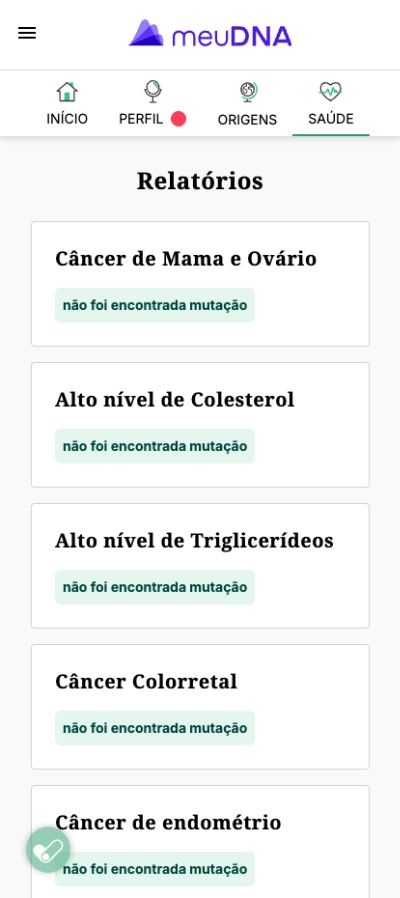
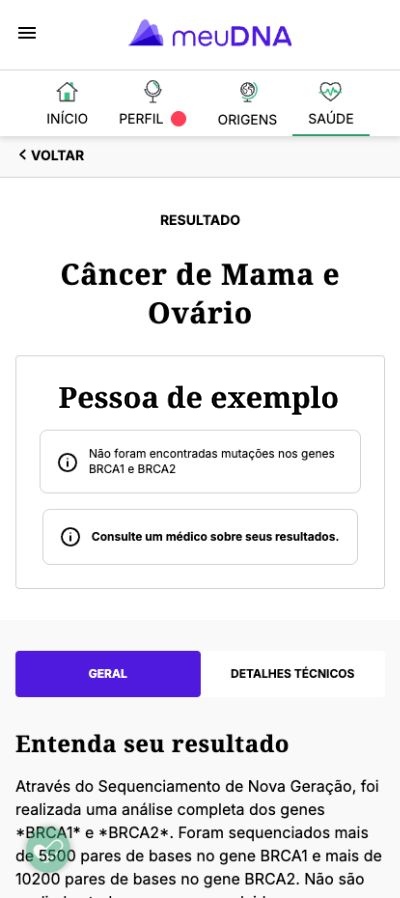
I joined the project at the start in 2019 and stayed until 2022. I developed features for the online store, customer portal and public website, including ancestry and health reports and kit activation.
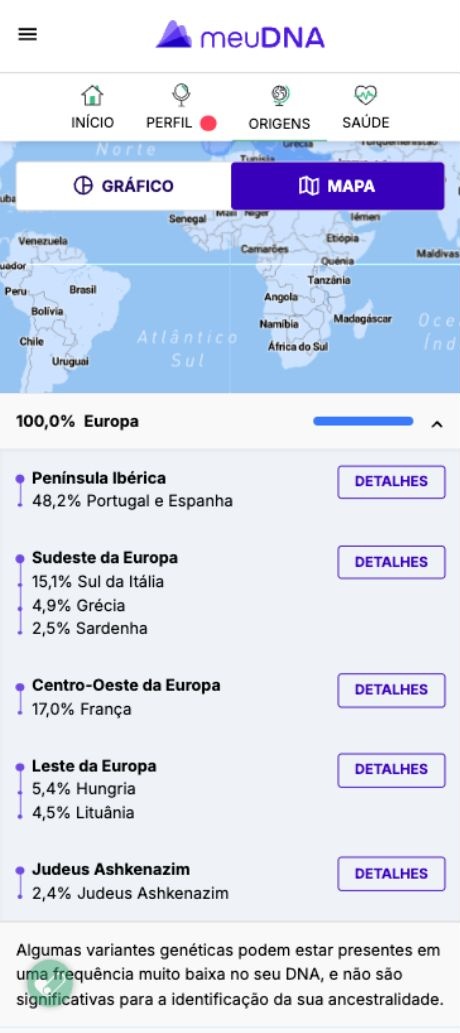
Development
We were a full-stack team. The website and platform were built in Angular, the app in Flutter, and the backend started in Express before we migrated to NestJS.
My focus was accessibility and getting the interface details right, so I was most involved in the Angular project. I also worked on the backend, including APIs for kit activation.
Since all development was done in-house, I also worked on configuring Google Cloud and Firebase services, CI/CD pipelines and unit tests with Jest.
How we worked
During the first year, we had a manager. After that, we became a self-managed team, and senior developers also took responsibility for identifying, organizing, estimating and prioritizing tasks, as well as mentoring less experienced developers.
We had the freedom to choose the tasks we wanted to work on. If I wanted to pick up a task for the app, for example, I could. As deadlines approached, everyone focused more on their areas of experience to help the team finish what was left.
We also ran into problems, including serious bugs in production. As a self-managed team, it was our responsibility to understand what had gone wrong and change how we worked. We introduced unit tests and reviewed each other’s code before releases. After those changes, we had no further serious production issues while I was on the project.
That freedom kept the work varied and gave us room to learn by doing. It was one of the projects where I had the most autonomy, both in development and in decisions about how we worked.